
Table of Contents
How Can I Advocate for My Child at School?
You can advocate for your child at school by learning your child’s educational rights, building a collaborative relationship with teachers and staff, and requesting evaluations or accommodations based on your child’s individual needs. Effective autism advocacy at school works best as an ongoing partnership with the staff, not a one-time conversation.
Starting school is an exciting milestone, but for many parents of children with autism, it can also bring uncertainty. Questions about classroom support, communication with teachers, and educational rights often arise long before the first day of school. If you’re feeling overwhelmed, you’re not alone.
Learning about autism advocacy at school can help transform uncertainty into confidence. Advocacy isn’t about challenging every decision a school makes, but working alongside educators to ensure your child receives the support they need to learn, participate, and thrive.
Regardless of the level of support your child may need, effective advocacy and autism begin with understanding your child’s individual strengths, challenges, and learning style.
The first thing to keep in mind in this process is that every educational journey is unique. Some students benefit from specialized instruction, while others need carefully selected autism accommodations at school to participate successfully in the classroom.
Keep reading this guide by ABA Centers of Rhode Island as we unveil why understanding your child’s educational options and building collaborative relationships with school staff and families can create a stronger foundation for long-term success.
Why Autism Advocacy at School Matters
Every child with autism experiences school differently. Some students may need support with communication or executive functioning, while others benefit from sensory strategies, social guidance, or structured routines. This is why autism advocacy at school is so important: it helps ensure educational decisions are based on the individual child rather than assumptions about autism.
Parents and educators each contribute valuable perspectives. Families understand how their child communicates and learns outside the classroom, while teachers observe academic performance and peer interactions throughout the school day. Working together makes it easier to identify appropriate autism accommodations at school and adjust those supports as a child’s needs change.
Research published by the National Library of Medicine highlights that parents who felt more satisfied with the IEP planning process reported fewer experiences of school exclusion for their children with autism — underscoring how collaborative, well-managed planning benefits students beyond the classroom.
For Rhode Island families, understanding the relationship between advocacy and autism helps transform school meetings into collaborative conversations that focus on helping children succeed academically, socially, and emotionally.
Understanding Educational Supports Before Challenges Arise
One of the best ways to strengthen autism advocacy at school is to become familiar with available educational supports before concerns arise. Understanding how schools evaluate students and determine services allows parents to participate more confidently in educational planning.
Two of the most common support plans include:
Individualized Education Program (IEP)
An Individualized Education Program (IEP) is designed for students who qualify for special education services under the Individuals with Disabilities Education Act (IDEA). It establishes measurable goals, specialized instruction, related services, and individualized autism accommodations at school based on comprehensive evaluations.
Section 504 Plan
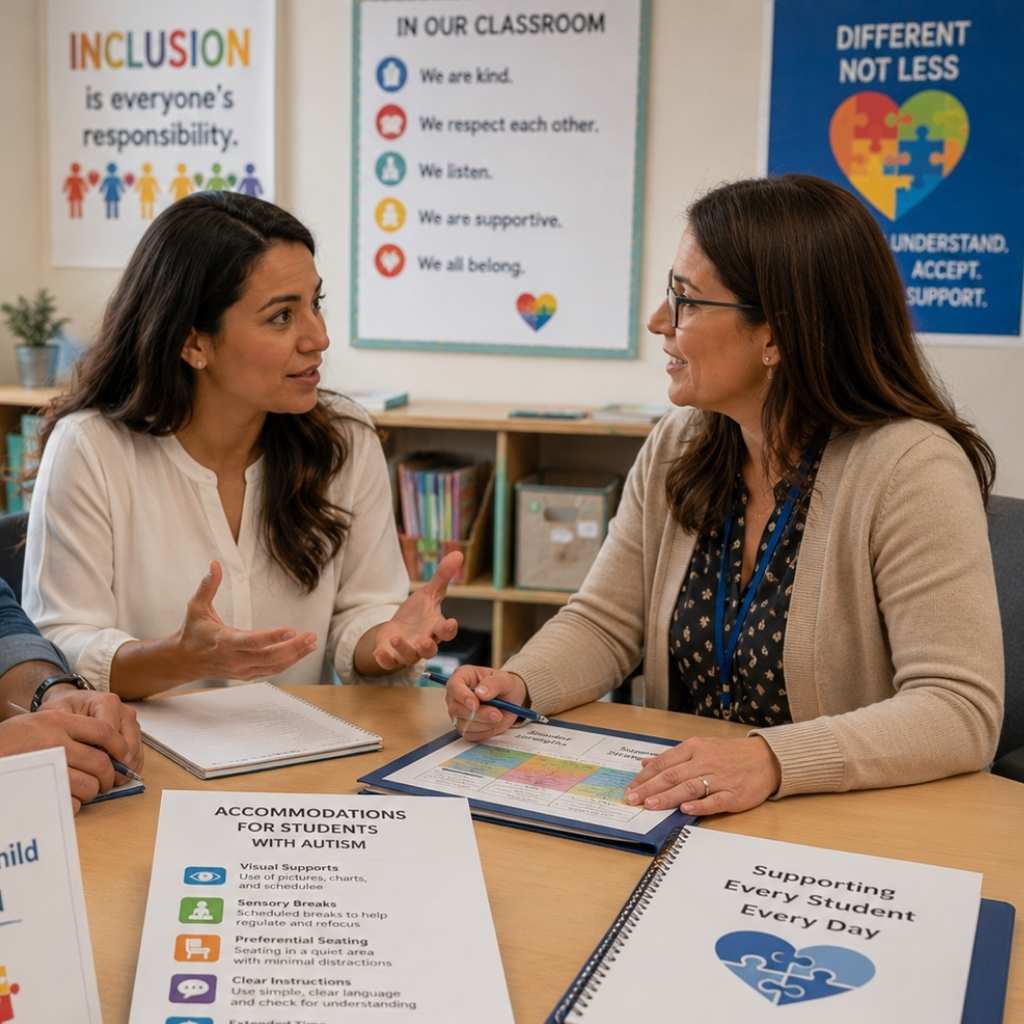
A Section 504 Plan provides accommodations that allow students to access learning alongside their peers without requiring specialized instruction. Depending on the student’s needs, autism accommodations at school may include sensory breaks, visual schedules, preferential seating, flexible testing environments, or additional time for assignments.
Neither plan is inherently better than the other. The appropriate level of support depends on each student’s individual profile. Effective advocacy and autism planning involve understanding recommendations, asking questions, and ensuring that educational plans continue to reflect the child’s development over time.
Preparing for School Meetings with Confidence
Many parents feel nervous before their first IEP or 504 meeting. Fortunately, preparation often makes these conversations more productive and less stressful.
Before meeting with school staff, consider bringing:
- Recent evaluations or diagnostic reports
- Therapy recommendations
- Notes about your child’s strengths and challenges
- Examples of strategies that work well at home
- A written list of questions or priorities
Keeping organized records helps autism advocacy at school stay focused on practical solutions rather than emotions alone. It also allows families to evaluate whether current autism accommodations at school continue supporting meaningful progress as their child grows.
The SPARK for Autism initiative encourages parents to prepare for meetings, communicate openly with educators, and view advocacy as an ongoing partnership that evolves throughout a child’s educational journey.
Advocacy and Autism: Questions Every Parent Should Ask
One of the most effective ways to strengthen advocacy and autism is by asking thoughtful questions during school meetings. Parents are equal members of the educational team, and their observations play an important role in planning appropriate supports.
Consider asking questions such as:
- What are my child’s greatest classroom strengths?
- Which situations seem most challenging?
- How will progress be measured?
- Which autism accommodations at school have been most successful?
- How will communication between home and school be maintained?
- When should the educational plan be reviewed?
The Autistic Self Advocacy Network (ASAN) emphasizes that students and families benefit when educational planning is collaborative, individualized, and centered on the student’s goals and needs.
Asking questions like these strengthens autism advocacy at school while reinforcing that successful advocacy and autism depend on partnership rather than conflict.
Examples of Autism Accommodations at School That Support Daily Success

The most effective autism accommodations at school are individualized and based on a student’s unique strengths, challenges, and learning style. As children grow and classroom expectations change, accommodations should be reviewed regularly to ensure they continue supporting meaningful progress.
Depending on the student’s needs, autism accommodations at school may include:
- Visual schedules and written instructions
- Noise-reducing headphones during loud activities
- Scheduled sensory or movement breaks
- Flexible seating or access to a quiet workspace
- Extra time for assignments or assessments
- Social narratives for transitions or unexpected schedule changes
- Positive behavioral supports
- Alternative ways to complete assignments or demonstrate understanding
The Organization for Autism Research explains that individualized academic supports help students participate more confidently while promoting greater independence and long-term classroom success. The goal of autism accommodations at school is not to lower expectations, but to give students equitable access to learning.
Why Autism Advocacy at School Requires Year-Round Collaboration
One of the most important lessons parents learn is that advocacy and autism are not limited to annual IEP meetings. Successful collaboration happens throughout the school year.
Checking in with teachers, monitoring your child’s progress, and sharing important updates from home all help create stronger partnerships. Small conversations often prevent small concerns from becoming larger challenges.
The Autistic Self Advocacy Network (ASAN) encourages families and schools to work together while respecting each student’s individual needs, strengths, and educational goals. This collaborative approach helps ensure that autism advocacy at school remains focused on helping students succeed rather than simply responding to problems.
For Rhode Island families, maintaining consistent communication with educators also makes it easier to adjust autism accommodations at school as children develop new skills and classroom expectations evolve.
Building Confidence Through Autism Advocacy at School
Successful autism advocacy at school isn’t about having every answer before your child enters the classroom. Instead, it’s about asking thoughtful questions, staying informed, and remaining engaged throughout your child’s educational journey.
Families who practice effective advocacy often:
- Keep copies of evaluations and educational plans
- Review goals and accommodations regularly
- Celebrate progress alongside academic challenges
- Approach school meetings with curiosity and a collaborative mindset
- Speak up when supports no longer meet your child’s needs
The SPARK for Autism initiative notes that preparing for meetings, understanding educational processes, and building positive relationships with school teams can help families become stronger advocates for their children.
As your child grows, autism advocacy at school may look different from year to year. Remaining flexible while continuing to communicate openly helps ensure educational decisions always reflect your child’s current strengths and needs.
Frequently Asked Questions
Who determines autism accommodations at school?
Parents, educators, and qualified professionals work together to determine appropriate autism accommodations at school using evaluations, classroom observations, and ongoing progress monitoring.
- Can autism accommodations at school change over time?
Yes. As children grow and educational expectations evolve, autism accommodations at school should be reviewed and updated whenever necessary to continue supporting academic and social success.
- How can parents strengthen autism advocacy at school?
Strong autism advocacy at school begins with preparation, open communication, and collaboration. Learning about educational rights, organizing important records, and participating actively in school meetings all contribute to effective advocacy and autism support at school.
- What should I do if I disagree with my child’s educational plan?
Start by requesting a conversation with your child’s educational team. Many concerns can be resolved through respectful discussion, additional evaluation, and collaborative problem-solving. Maintaining open communication is an important part of advocacy and autism.
Helping Your Child Thrive at School

Navigating autism advocacy at school can feel overwhelming at first, but you don’t have to do it alone. By understanding your child’s educational rights, requesting appropriate autism accommodations at school, and practicing informed autism advocacy, you can help create a learning environment where your child feels supported, confident, and ready to succeed.
At ABA Centers of Rhode Island, we believe families should never have to navigate the educational journey by themselves. Through comprehensive autism evaluations, individualized ABA therapy, and family-centered support, we help parents feel confident advocating for their child’s needs both at home and at school.
To learn more about our services, call (855) 922-4184 or visit our contact page to schedule a consultation.
*Educational Disclaimer: This article is intended for informational and educational purposes only and should not be considered legal advice. Educational rights, eligibility, and school procedures may vary depending on your child’s individual circumstances and applicable federal and Rhode Island laws.